
 English


 Published: August 21, 2026
 Editor: Ziyan
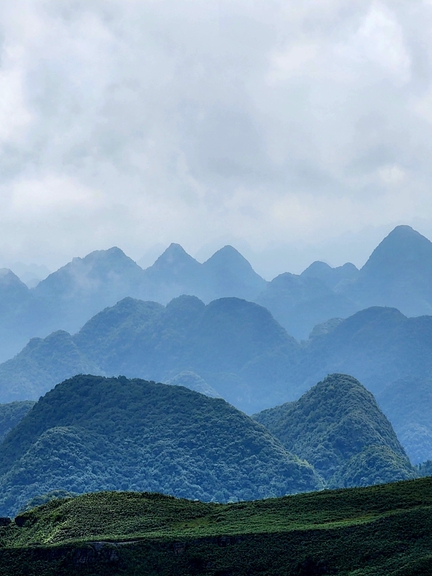
Nestled in the heart of the Wumeng Mountains in northwestern Guizhou, Bijie is a land where karst wonders meet high-plateau serenity. The region boasts a rich tapestry of geological landscapes—limestone caves, sinkhole skylights, natural bridges, peak clusters and alpine meadows—all wrapped in pristine vegetation. Home to ethnic communities such as the Yi and Miao, Bijie blends ecological splendor with vibrant cultural traditions, making it an ideal summer retreat.
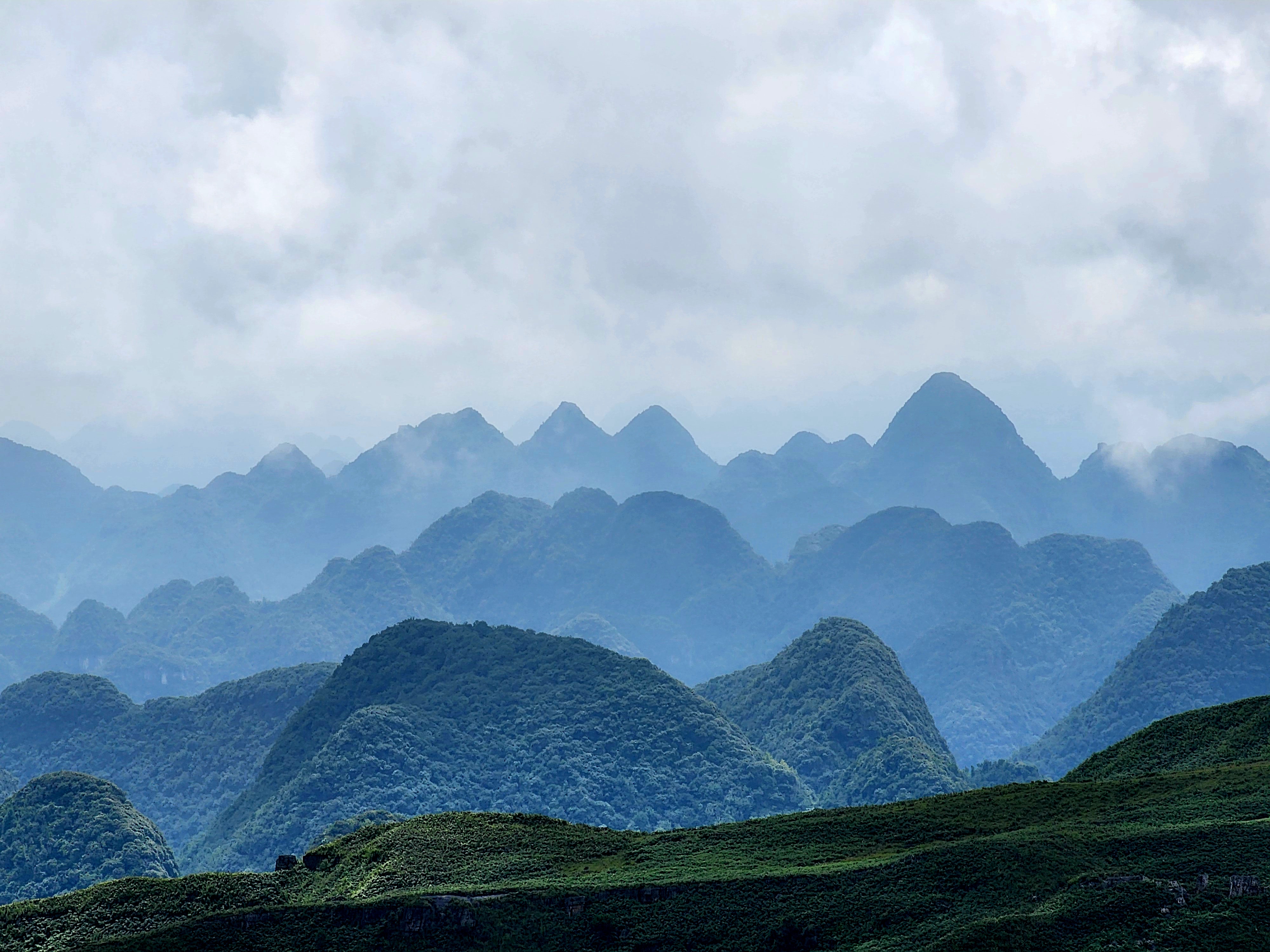
Axilixi Alpine Meadow, Hezhang county, Bijie
Image courtesy of China Tourism News Photo Library
Zhijin Cave
Located in Guanzhai Miao township, Zhijin county, Zhijin Cave is a colossal treasure house of karst formations. It hosts the largest and most fully developed karst landscape discovered in China and is acclaimed as the "Encyclopedia of Karst Landforms." The cave extends 6.6 kilometers in length, reaching 175 meters at its widest point, with a relative elevation drop of more than 150 meters. Its total volume exceeds 5 million cubic meters, unfolding across three levels—upper, middle and lower. More than 40 varieties of speleothems can be found within, including stalagmites, stalactites, stone pillars and delicate stone flags, each sculpted into countless fantastical forms. Interlacing passages, subterranean rivers and hidden underground lakes earn the cave its second honorific: the "Gem of Karst."
Baili Rhododendron
In summer, Baili Rhododendron scenic area transforms into a lush green sanctuary. With high forest coverage and cool, refreshing temperatures, the scenic area is built around forest vegetation and a network of hiking trails—a perfect escape for summer retreats and outdoor walking.
Axilixi Ertaipo
Ertaipo is anchored by tens of thousands of mu of alpine meadow—a rare high-plateau grassland in southern China. In August, the grass is at its verdant peak and temperatures stay pleasantly low, making it an ideal summer refuge. The terrain is gentle, dotted with ridges and karst peak clusters. A 13-kilometer "Wave Road" winds through the meadows, inviting visitors to drive across the open plateau. Here you can camp under the stars, watch local herders graze their cattle and sheep, and experience the quintessential spirit of the highlands.
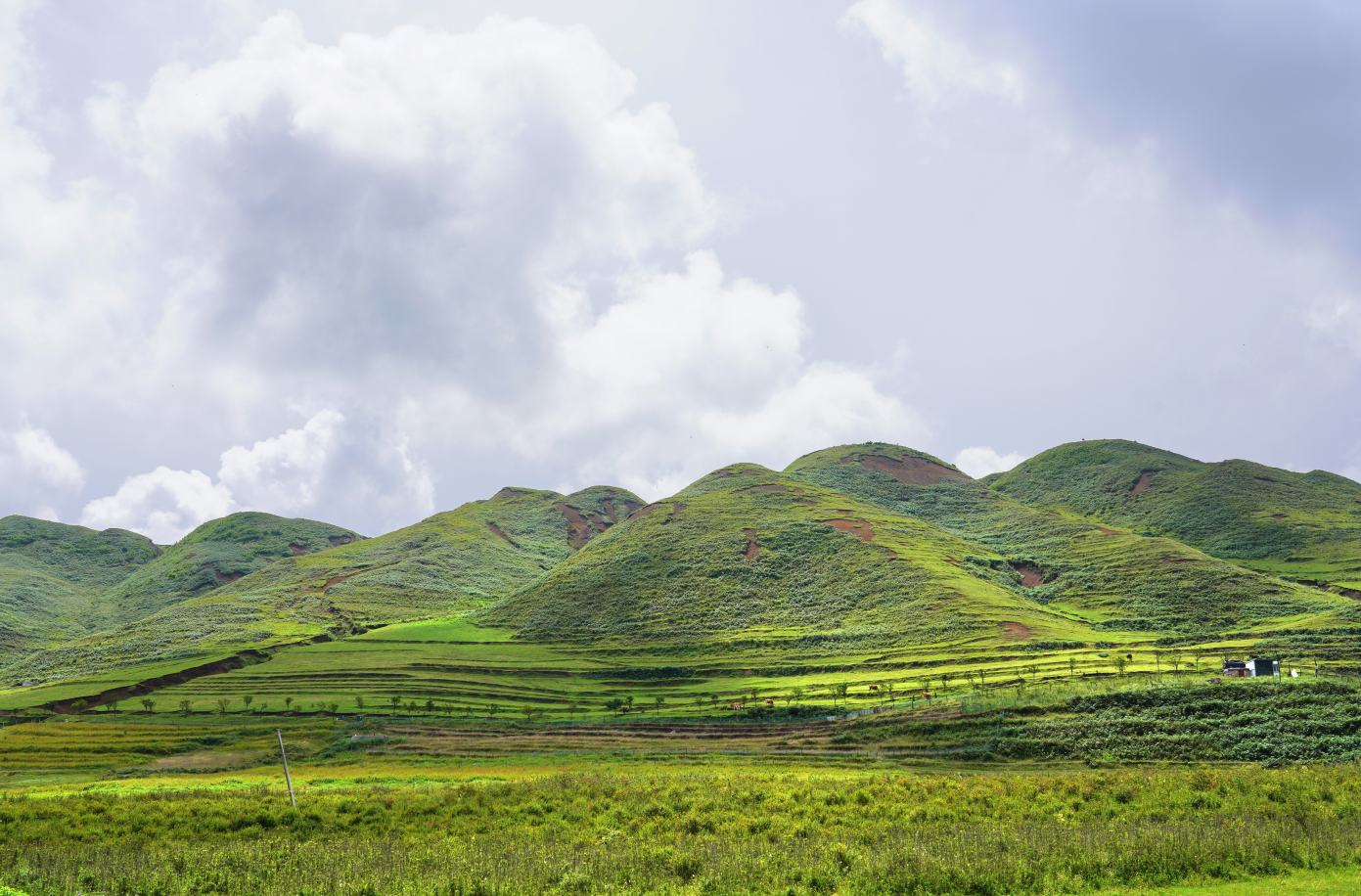
Axilixi Ertaipo Scenic Area
Image courtesy of China Tourism News Photo Library
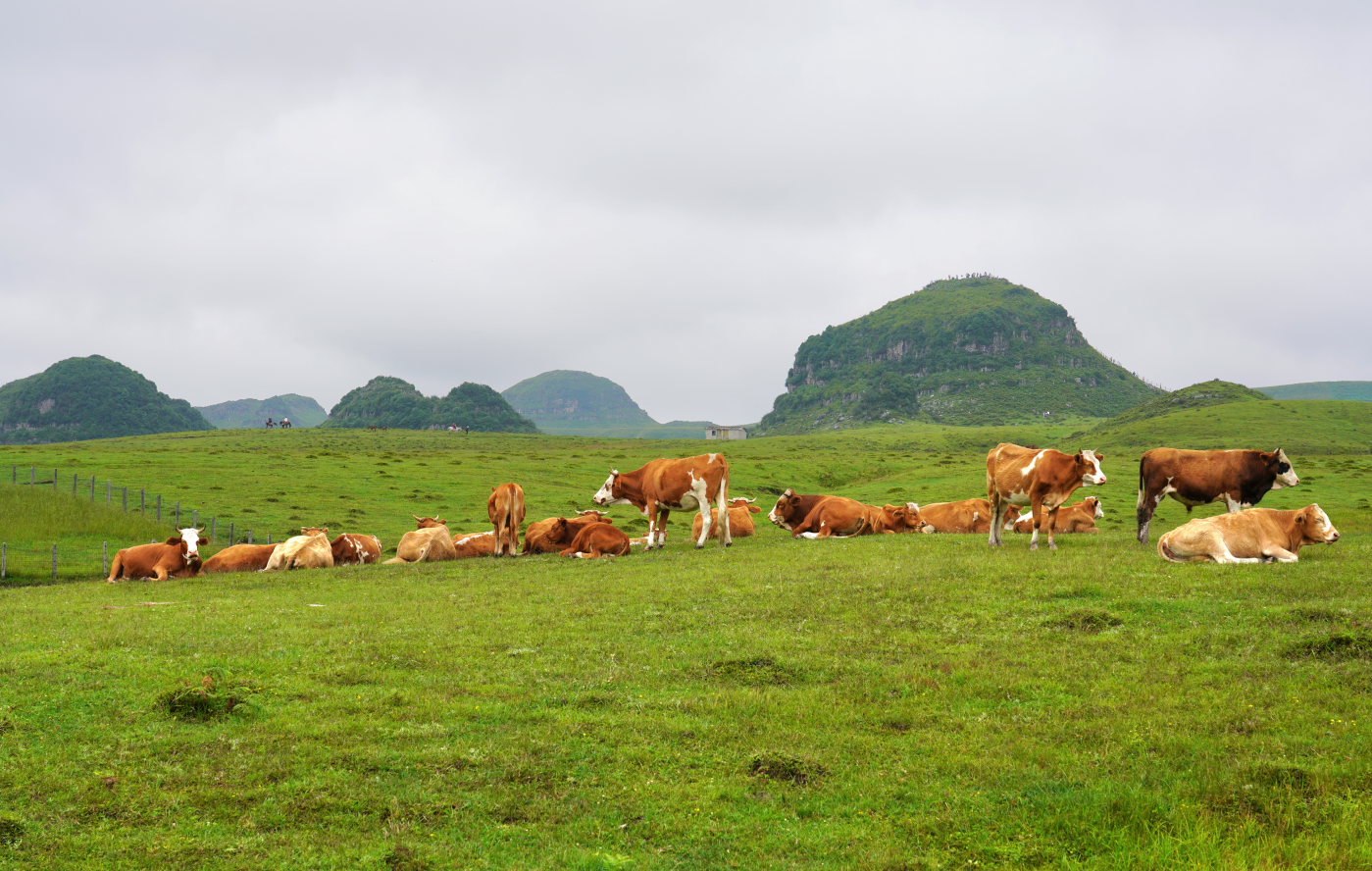
Axilixi Ertaipo Scenic Area
Image courtesy of China Tourism News Photo Library
Axilixi Jiucaiping (Wild Chive Plateau)
The main peak of Jiucaiping rises to 2,900.6 meters above sea level, offering a cool sanctuary even in the height of summer. From late August to September, wild chives burst into bloom, blanketing the alpine meadows with vast spreads of purple flowers. Visitors can ascend via sightseeing shuttle, cable car or the ring-shaped mountain trail, reaching the summit for a panoramic view over the flower sea and the rolling plateau beyond.
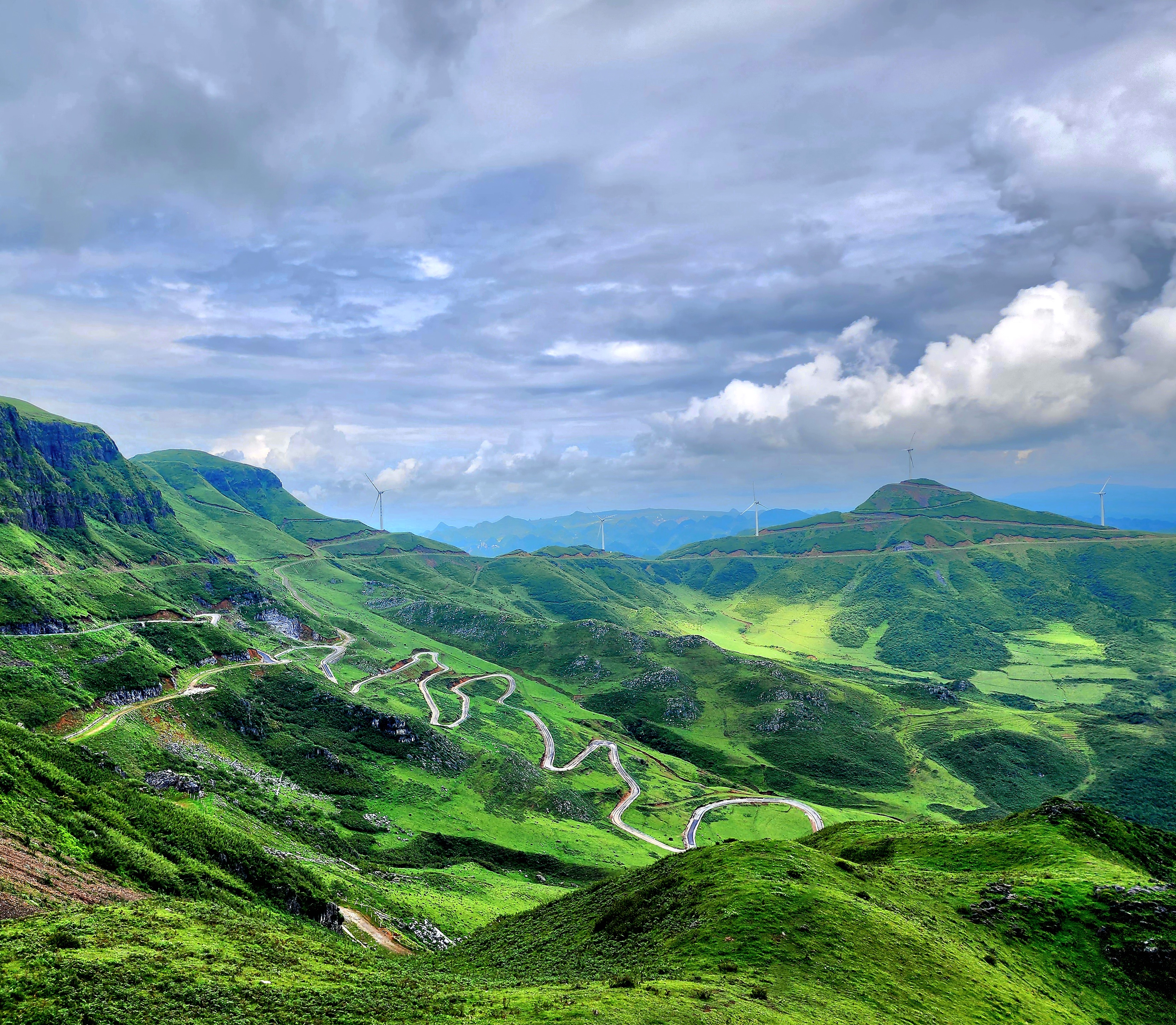
Axilixi Jiucaiping Scenic Area
Image courtesy of China Tourism News Photo Library
Jiudongtian
Jiudongtian showcases a classic skylight-style karst system, seamlessly integrating caves, gorges, natural bridges and waterfalls. The Liuchong River disappears underground, cutting through the mountains and surfacing at nine points to form nine natural skylights—a phenomenon celebrated as "One River, Nine Windows." Hailed as the "Encyclopedia of Chinese Karst," the scenic area can be explored by boat along the underground river.
Weining Caohai Wetland
Caohai is Guizhou's largest natural freshwater lake wetland, long honored as the "Pearl of the Plateau." During the summer high-water season, the lake expands into a vast mirror, fringed by thriving aquatic plants and a well-preserved wetland ecosystem. With average daily temperatures ranging from 17°C to 22°Cin summer, the area offers lakeside promenades and on-water tours—an idyllic setting for leisurely sightseeing.