 English



 Published: October 30, 2026

 Editor: Xinyi
The Populus euphratica forest in Ejina is a living legend—and the Strange Forest is its “sequel.”
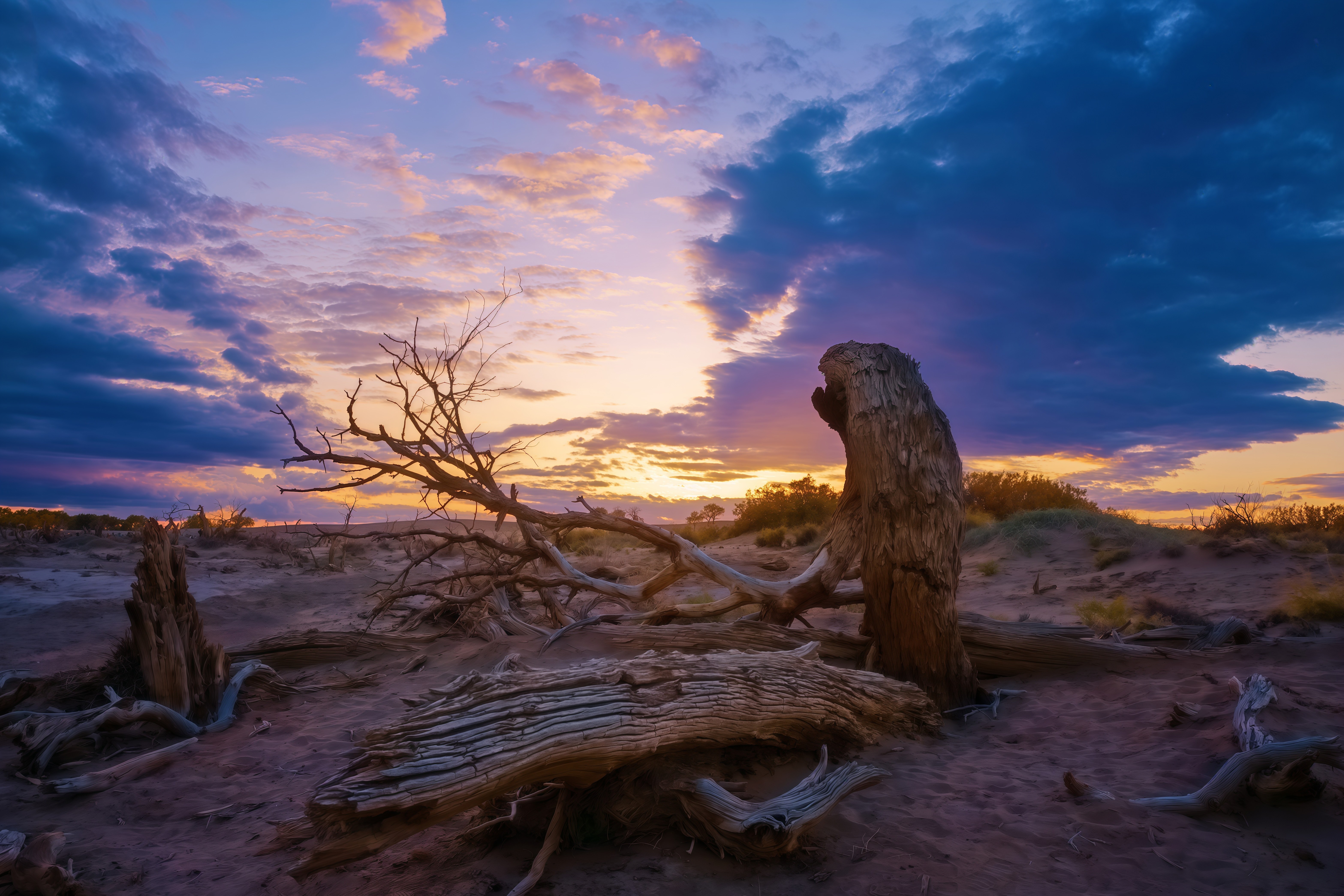
The Ejina Strange Forest sits within the Heicheng Ruoshui Populus Euphratica Scenic Area. It was once a lush grove of Populus euphratica, but after the Heihe River was diverted and water sources dried up, it became the landscape of scattered deadwood you see today.
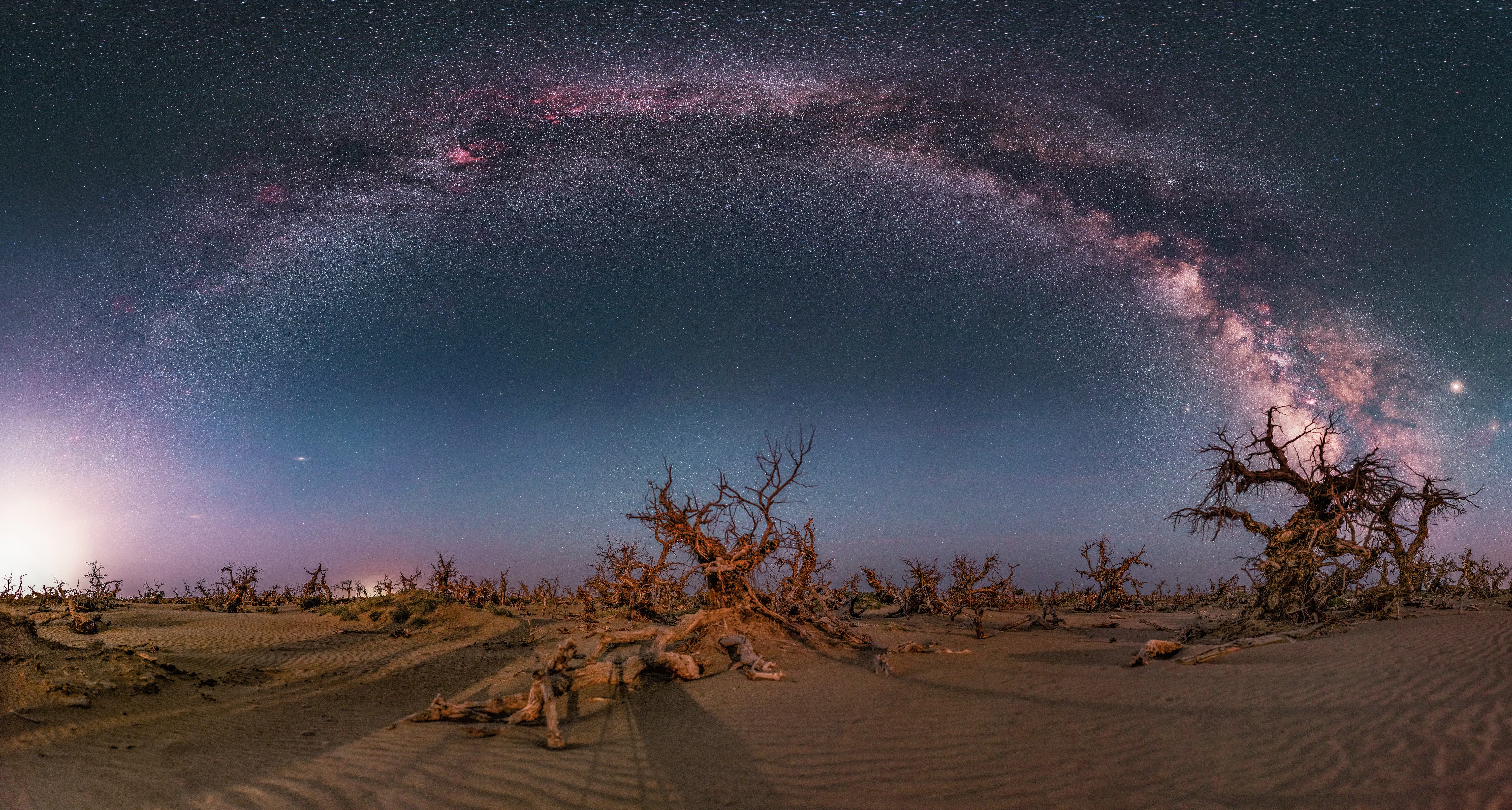
As you walk into the Strange Forest, dead Populus euphratica trunks spread out across the sand in every direction—blue sky overhead, yellow sand underfoot, and the dead trees simply standing there. Some bend into huge arches; others twist and coil, their limbs gnarled and powerful, like bones growing out of the sand. Their rough, cracked bark bears the marks of time, and a few branches still stubbornly hold green leaves—life and death coexisting quietly on the same tree. Locals often say that Populus euphratica “lives for a thousand years without dying, dies for a thousand years without falling, and lies for a thousand years without decaying.” This claim can't be verified, but standing among the dead trees of the Strange Forest, you begin to see there's something to it.
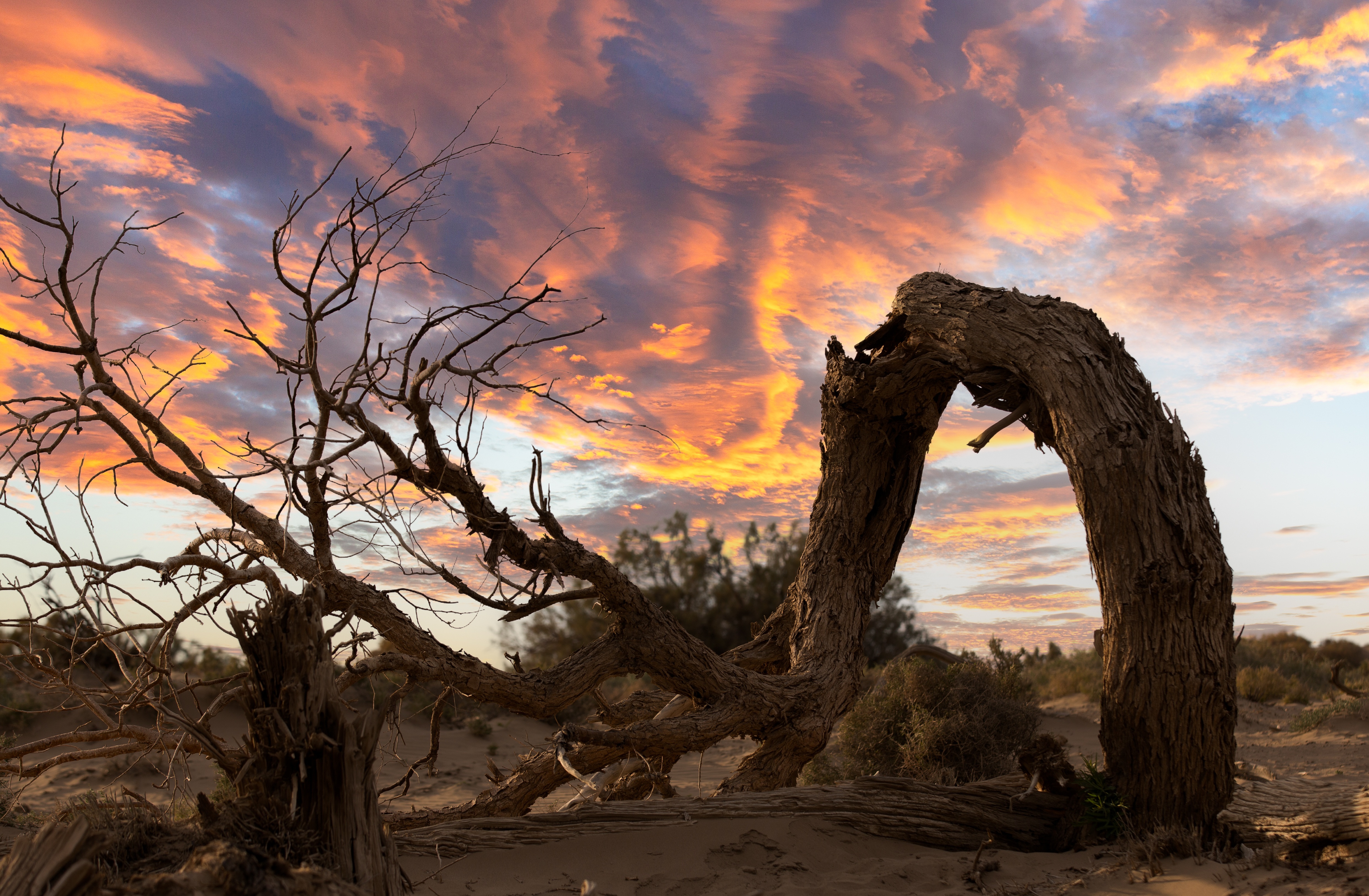
When you visit the Strange Forest, make sure to stay for sunset. About an hour and a half before sunset is the golden window for photography—backlit, the dead branches stretch into long golden silhouettes, with striking visual impact. “Rooster Crowing at Dusk,” “Lone Wolf Bowing to the Moon,” and “Golden Rooster Bringing Fortune” are classic shooting spots, each with its own dead-tree poses and play of light, and wherever you walk, you can find a frame that belongs to you alone.
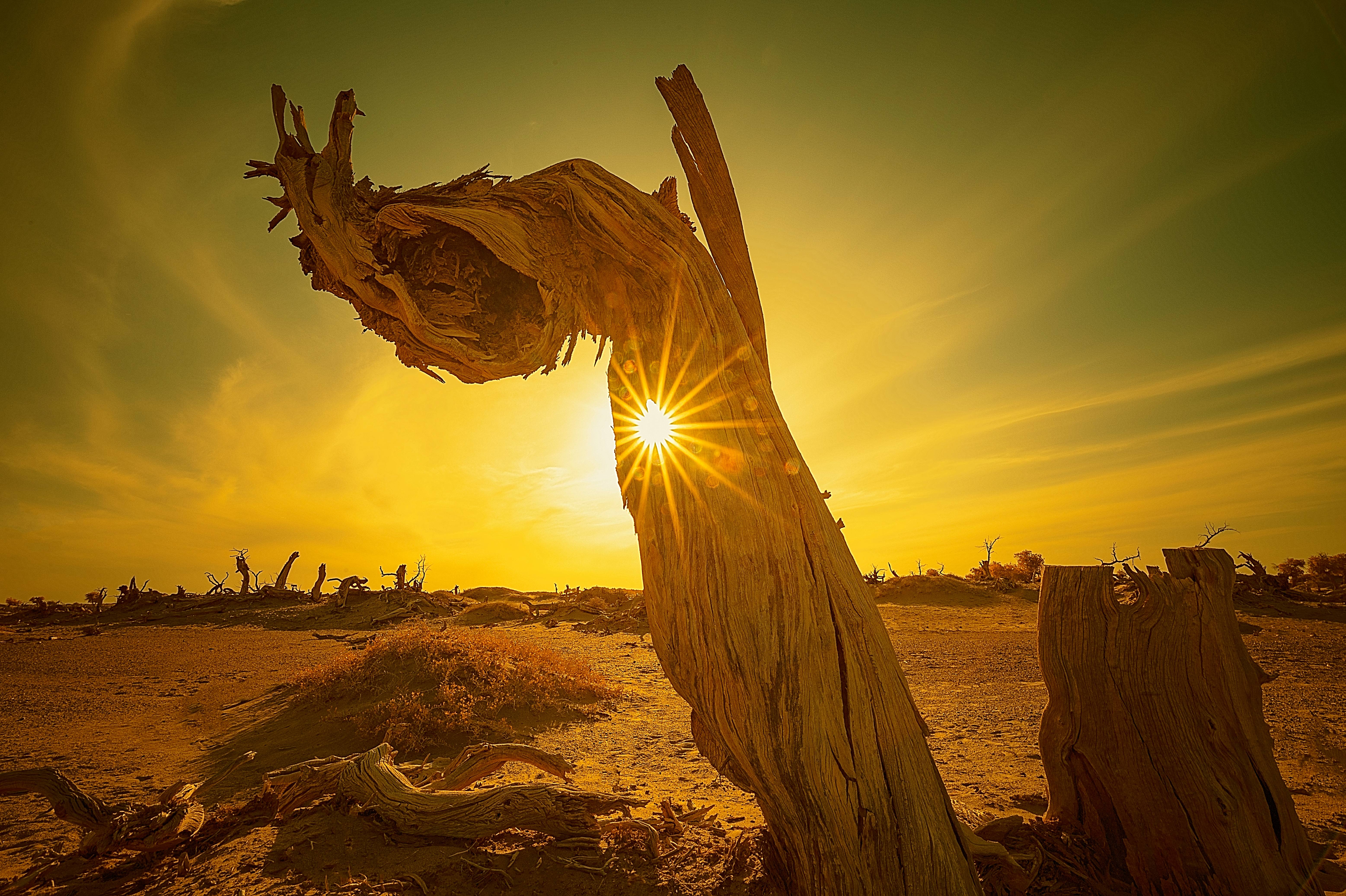
Standing among these dead trees, you'll suddenly understand what tenacity means—and why some people come from far and wide just to see this desolation in the setting sun.